
Collective Identity, Cultural Resonance and the Power of Recognition
Over the years, I have often wondered why some cultural programmes attract extraordinary public interest while others, despite considerable artistic value, careful planning and significant marketing investment, struggle to achieve the same response.
As cultural programmers, we spend a great deal of time trying to understand our audiences. We study their preferences, identify target groups, develop communication strategies and consider how to make our programmes more relevant and accessible. We review and analyse the numbers over and over again. Yet every now and then, we encounter an experience that reminds us that audience behaviour cannot always be explained through conventional programming and marketing approaches.
I have been thinking about this recently while observing the public response to The RAGE 90s, currently taking place at the Cultural Foundation in Abu Dhabi.
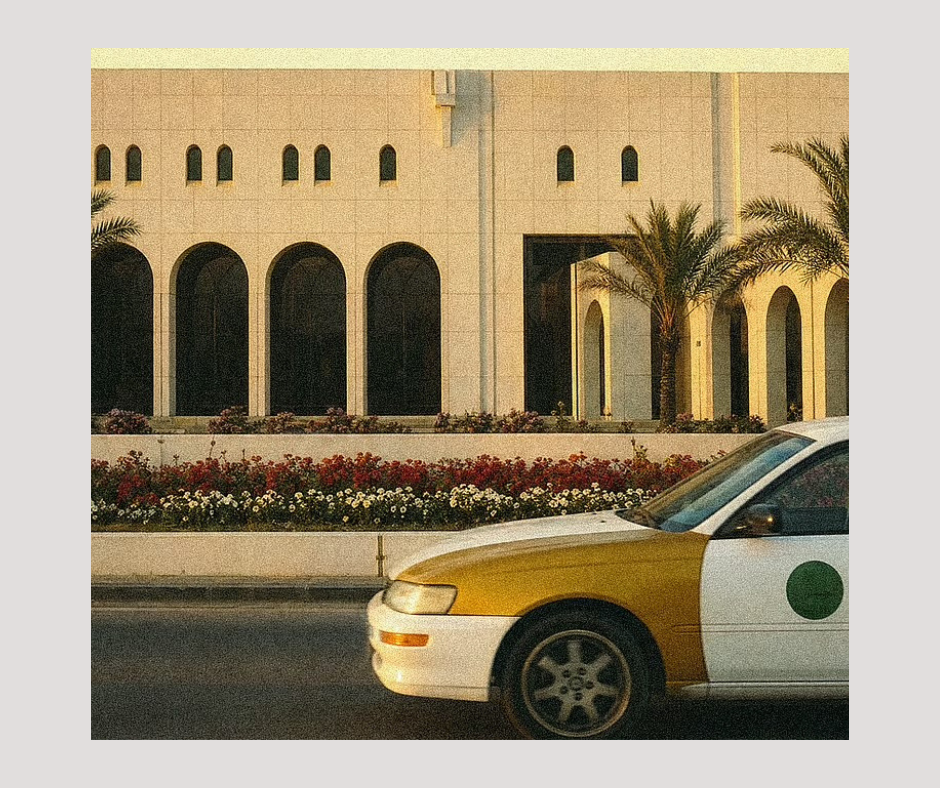
The event recreates aspects of everyday life in Abu Dhabi during the 1990s, from the familiar gold-and-white taxis and neighbourhood shops to arcade games, cinema, music and food. What interests me most is not simply the recreation of that period, but the remarkable enthusiasm with which people have responded to it.
From our programming perspective, we have witnessed people coming together around this experience without investing in a single paid advertisement. Visitors have been sharing their experiences, inviting friends and bringing family members.
It made me think about something I have explored throughout this series: our innate human need to express ourselves, connect with others and find meaning in shared experiences.
But perhaps there is another dimension to this need that deserves closer attention: our desire to recognise ourselves in what we encounter.
The relationship between memory and belonging
In Part V, The Human Need to Express, and Part VI, Humanity's Oldest Mechanism for Connection, I explored the idea that artistic and cultural expression is deeply embedded in human nature.
Long before the development of cultural institutions, organised performances or contemporary creative industries, human beings were using sound, movement, images, storytelling and rituals to communicate experiences and establish relationships.
These activities helped communities express emotions, transmit knowledge and develop a sense of belonging.
I find it interesting that thousands of years later, despite the extraordinary transformation of our societies and technologies, we continue to seek many of these same connections through cultural experiences.
We gather around music that reminds us of particular moments in our lives. We recognise familiar objects, sounds and places. We share stories about experiences that shaped us, and we often feel an immediate connection with others who remember them too.
This is where the concept of collective memory becomes relevant.
French sociologist Maurice Halbwachs argued that memory is not exclusively individual, but is also shaped by the social groups to which we belong. We remember through relationships, shared experiences and the social environments that give those experiences meaning.
This offers an interesting perspective on cultural programming.
When people encounter something connected to their collective memory, they may respond to much more than the content of the programme itself. They recognise a period of their lives, a social environment or a familiar part of their identity.
An old taxi is no longer simply a vehicle. A familiar song is no longer simply music. A neighbourhood shop is no longer simply a place where goods were sold.
Each may become a reminder of people, relationships and experiences that contributed to someone's understanding of the world.
And perhaps this explains why an apparently ordinary object can sometimes generate a stronger emotional response than an elaborate artistic production.
Its significance is not necessarily in the object itself, but in the meaning people have attached to it.
Nostalgia as a shared experience
Nostalgia is often described as a sentimental longing for the past. Yet psychological research suggests that its significance extends beyond remembering earlier experiences.
Research by Constantine Sedikides and colleagues has explored how nostalgia can support feelings of social connectedness, meaning and continuity between our past and present selves.
I find this particularly relevant when thinking about cultural participation.
At The RAGE, people who remember Abu Dhabi in the 1990s can revisit aspects of an environment they once knew. But what makes the experience interesting is that they are not necessarily doing so alone.
They are bringing their children, sharing memories with friends and explaining familiar objects to younger generations who may never have encountered them.
What was once an individual memory becomes a conversation.
A parent remembers an experience, a child becomes curious, and something from the past acquires a new place in the present.
In Part IX, What We Keep Alive, I reflected on how songs, stories and cultural practices continue through the relationships people develop with them. Their survival depends not only on preservation, but on the willingness of people to practise, reinterpret and pass them forward.
I see a similar process here.
The RAGE may recreate an earlier period, but the experiences taking place within it belong to the present. New memories are being created around old ones.
This becomes particularly meaningful in societies experiencing rapid urban, social and technological transformations, where familiar environments, traditions and everyday experiences can change significantly within the lifetime of a single generation.
In such contexts, the familiar details of everyday life become important markers of continuity, connecting people to their personal and collective histories while helping them make sense of who they were, who they are and how their communities have evolved.
When audiences become the messengers
There is also an important programming question here.
Why do people feel motivated to share certain experiences without being encouraged through paid promotional campaigns?
We often approach word of mouth as a marketing mechanism, measuring how recommendations and social sharing contribute to audience development.
But I wonder whether, in some cases, sharing is actually part of the cultural experience itself.
When someone encounters something that reminds them of their childhood, they may immediately think of a sibling, a parent or an old friend who shares that memory.
Their desire to invite that person is not necessarily about recommending an event. It may be about wanting to revisit a meaningful experience together.
Similarly, sharing a photograph of a familiar object can become a way of communicating personal identity: this is something I remember, something that belonged to my life, something that connects me to a particular place or generation.
The programme provides the occasion, but audiences bring their own meanings and relationships into it.
This does not mean that cultural resonance replaces marketing. Accessibility, timing, communication, previous recognition and the quality of the experience all influence attendance.
Nor does it mean that programmes drawing large crowds necessarily create greater cultural impact than those reaching smaller audiences.
However, it suggests that some of the strongest motivations for participation may already exist within the communities we are trying to engage.
Our role as programmers is to recognise these motivations and consider how they can become the starting point for meaningful cultural experiences.
What does this mean for cultural programming?
In Part X, What We Choose to Pass Forward, I reflected on the responsibility we carry when selecting and presenting cultural experiences.
I argued that popularity alone should not determine our programming decisions. We also need to consider artistic quality, cultural relevance, the ideas being communicated and the opportunities we create for audiences to encounter unfamiliar forms of expression.
I continue to believe this.
If we programme only what audiences already know and enjoy, we risk limiting the very curiosity and discovery that cultural institutions should encourage.
But there is also something important to learn from the experiences that people respond to so naturally.
Understanding collective memory and identity can help us identify meaningful entry points into cultural participation.
A familiar song may introduce an audience to a different musical interpretation. An everyday object may open a conversation about a city's social history. A remembered cultural practice may become an opportunity for intergenerational exchange.
Familiarity can create the initial connection, while thoughtful programming can take the experience further.
At the same time, we need to remember that collective identity is never entirely uniform. Different generations and communities may carry different memories of the same place, and nostalgia can sometimes privilege certain experiences while overlooking others.
This makes listening particularly important.
The RAGE offered an interesting example of how this could happen in practice. Rather than simply presenting the 1990s as a period to be observed or remembered, the programme created an environment in which audiences could actively engage with elements of everyday life from that time. Visitors could walk through recreated neighbourhood settings, encounter familiar shops and objects, play arcade games, listen to music and interact with experiences that once formed part of daily life. This participatory approach transformed nostalgia from something people simply feel into something they could experience, express and share with others.
What makes this particularly interesting is how audiences themselves became contributors to the experience. Parents explained familiar objects and practices to their children, friends exchanged memories, and different generations engaged with the same environment from their own perspectives. For some, it was an opportunity to revisit personal memories; for others, it was a chance to discover a period they had never experienced. The programme provided the setting, but it was the audiences who brought it to life through their stories, interactions and shared experiences. This reminds us that meaningful cultural programming is not only about what we present, but also about the opportunities we create for people to participate, connect and contribute their own meanings.
What we recognise in one another
I began this reflection by asking why some cultural programmes seem to attract audiences almost effortlessly.
I do not think there is a single answer, nor do I believe that cultural resonance can be manufactured through a particular programming formula.
But observing The RAGE has reminded me that the relationship between people and culture often begins long before they enter a cultural venue.
It begins in the experiences they have lived, the relationships they have developed, the sounds and images they associate with particular moments, and the memories they continue to carry.
As cultural programmers, we may create the environment in which these connections become visible, but we do not create the connections themselves.
They already exist within the people who come together.
Perhaps this is one of the most interesting aspects of cultural programming: sometimes we introduce people to something they have never experienced before, and sometimes we give them an opportunity to rediscover something they thought they had left behind.
Both can be meaningful.
And both return us to the same human need I have been exploring throughout this series: the need to express, connect and belong.
What makes certain programmes resonate may not always be what we put into them, but what people recognise of themselves when they take part.
Notes and references
[1] Halbwachs, M. (1992). On Collective Memory. University of Chicago Press.
[2] Sedikides, C., Wildschut, T., Arndt, J. and Routledge, C. (2008). Nostalgia: Past, Present, and Future. Current Directions in Psychological Science, 17(5), 304–307.
[3] Kassem, R. (2026). The Human Need to Express. Cultural Programming with Impact, Part V.
[4] Kassem, R. (2026). Humanity's Oldest Mechanism for Connection. Cultural Programming with Impact, Part VI.
[5] Kassem, R. (2026). What We Keep Alive. Cultural Programming with Impact, Part IX.
[6] Kassem, R. (2026). What We Choose to Pass Forward. Cultural Programming with Impact, Part X.
[7] The National (4 November 2026) and Gulf News (6 November 2026), reporting on The RAGE 90s at the Cultural Foundation, Abu Dhabi.