
Memory, Motherhood and the Healing Power of Cultural Expression
Over the years, I have often found myself reflecting on the impact of the cultural experiences we create for others. Yet every now and then, a performance comes along that makes me reflect on the impact of these experiences on myself.
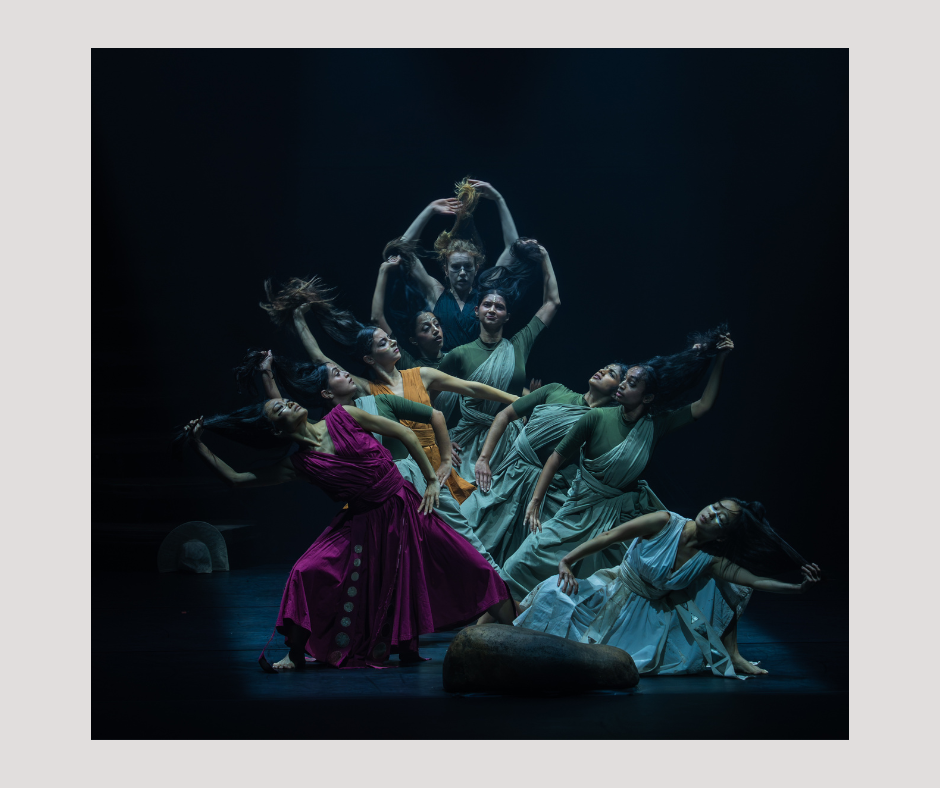
On 20 and 21 November 2026, we presented Akram Khan’s Thikra: Night of Remembering at the Cultural Foundation in Abu Dhabi, a production created in collaboration with Saudi visual artist Manal AlDowayan.
As cultural programmers, we spend months preparing for such moments. We study the artistic work, consider its cultural relevance, anticipate how audiences might respond, and attend to the many operational details that allow a performance to take place.
Yet nothing in that process can prepare us entirely for what might happen within us when the performance begins.
This time, I found myself connecting with the work from a very different place. Beyond my professional interest in the production, beyond my research into creative resilience and my longstanding belief in the transformative potential of the arts, I connected with it as a mother.
In 2009, I lost my daughter.
Seventeen years later, a performance inspired by the ancient landscapes and cultural memory of AlUla brought me into an intimate encounter with that part of my life.
And it made me think again about what we really mean when we speak about the healing power of art.
A night dedicated to remembering
Thikra, ذكرى in Arabic, carries a particularly intimate meaning. It can refer to a memory, a remembrance, or an occasion on which we return to something or someone who once formed part of our lives.
Commissioned by Wadi AlFann, the Valley of the Arts in AlUla, the production draws inspiration from the region’s ancient civilisations, ancestral knowledge, mythology and cultural heritage. Through an all-female ensemble, Akram Khan and Manal AlDowayan bring together Bharatanatyam, contemporary dance, visual expression and sound to imagine a community gathering around a ritual of remembrance.
At the centre of the narrative is a matriarch who leads her community in reconnecting with an ancestral spirit. Together, they summon this presence from what the production describes as the Knowledge Rock, allowing the past to return for a single night.
Through this encounter, the community revisits its history, confronts its pain and finds a possibility for healing. The ancestral spirit is eventually returned to rest until another year.
What particularly interests me about this narrative is that remembering is given a place within the continuing life of the community. The past is acknowledged, experienced and expressed collectively before the community moves forward.
There is something profoundly human about this idea.
Long before we developed the terminology of psychological wellbeing, trauma recovery and resilience, human beings were already creating rituals through which they could encounter difficult emotions. They gathered, sang, moved, told stories and commemorated those they had lost.
This brings me back to the concept of Al-Fitra (الفطرة), which I have repeatedly explored throughout this series as a way of understanding the innate human need to express, create and connect.
I often wonder whether the origins of many of our cultural practices can be traced back to this intrinsic human nature. Before artistic expression became a formalised practice, a profession or an institutional offering, it was already embedded in the ways human beings navigated life, celebrated existence, confronted loss and made sense of the world around them.
Across generations and civilisations, these instinctive responses gradually took shape as rituals, traditions and forms of cultural expression, becoming part of the intangible cultural heritage we continue to inherit and pass forward.
Perhaps what we recognise today as the healing potential of the arts is, in some ways, a rediscovery of something that has always existed within our Fitra: an instinctive understanding that certain human experiences need to be expressed, that memory needs a place to reside, and that some emotions become more bearable when expression takes place in the presence of others.
In this sense, Thikra does more than draw inspiration from ancestral cultural practices. It invites us to reconnect with the fundamental human needs from which such practices may have originally emerged.
Watching as a mother
There are experiences that divide our lives into a before and an after.
Losing a child is one of them.
When I lost my daughter in 2009, I encountered a dimension of motherhood that is particularly difficult to communicate. Motherhood continues even when the child is no longer physically present. The relationship changes, but the love and the sense of being her mother remain.
Time passes. Life develops in different directions. We take on new responsibilities, experience new joys, build relationships and become different versions of ourselves.
Yet somewhere within us, certain memories retain their own time.
What moved me about Thikra was the way in which the relationship between presence and absence was given a physical form. Watching the matriarch and the ancestral figure, the gestures of tenderness, the intensity of the movement and the eventual return of the spirit to rest, I found myself relating to the work through my own experience of motherhood and loss.
The story of the performance was not my story. Its characters belonged to a different world, its mythology emerged from a different cultural landscape, and its artistic language was shaped by traditions other than my own.
Yet I recognised something deeply familiar within it.
There was something particularly moving about the idea of being granted one night in which the boundary between absence and presence could briefly dissolve.
What would it mean for a mother to be given such a night?
Perhaps this is one of the extraordinary capacities of artistic expression. An artist does not necessarily need to know our personal history to create something that reaches into it. Through movement, sound, imagery and silence, a work can give form to something we have carried within ourselves for years.
For me, Thikra created a space in which I could encounter the memory of my daughter through a language that did not require me to explain my loss.
There was a moment during the performance when I looked at the small dancer dressed in white, embodying the character of the child, and, for a brief second, I saw my own daughter in her. In that moment, I realised that, seventeen years later, I had perhaps never given myself the opportunity to fully heal from this loss. I had not even allowed myself to open that box within me, where I had kept so many emotions tucked away while continuing with life. Yet that night, without consciously giving myself permission to revisit that part of my life, the performance opened that box for me. Through someone else's artistic expression, I found myself encountering a part of my own story that I had never fully allowed myself to explore.
Does healing mean moving on?
That moment in the theatre made me reflect on my own understanding of healing and resilience, both as a researcher and as someone who has experienced loss.
I have spent a considerable part of my professional and academic journey exploring resilience, particularly the role of creative and cultural engagement in supporting people experiencing prolonged adversity. Yet that evening, I found myself revisiting some of the very concepts I have spent years researching through the lens of my own lived experience.
One of the things I have become increasingly conscious of is how easily we associate healing with the disappearance of pain.
We speak about overcoming grief, moving on and finding closure. Sometimes, the language we use creates an expectation that recovery requires us to leave something behind.
But I wonder whether healing always needs to take this form.
And does our ability to move forward with life necessarily mean that we have given ourselves the opportunity to heal?
The concept of continuing bonds in bereavement studies offers another way of understanding grief. It recognises that people may maintain meaningful emotional relationships with those they have lost, and that these relationships can continue to evolve throughout their lives.
Remembering someone we have lost can coexist with joy, achievement, growth and a meaningful life.
We can continue to live fully while carrying the memory of someone whose physical presence we miss.
This understanding resonates with what I have explored through my Creative Resilience Framework, where resilience is considered through three interconnected dimensions: recovery, sustainability and growth.
Recovery allows us to regain a degree of emotional and functional stability. Sustainability relates to our ability to continue living and engaging with life despite adversity. Growth concerns the possibility of developing new capacities, perspectives and meanings through our experiences.
None of these necessarily requires forgetting, nor do they necessarily unfold in a linear progression.
Reflecting on my own journey, I realise that I have been able to sustain my life, grow professionally and personally, and find meaning in much of what I do. Yet this does not necessarily mean that I have fully engaged with every dimension of my loss. Our capacity to continue living and growing can coexist with emotions that we have not yet given ourselves the space to explore.
Perhaps healing is also about developing the capacity to revisit a painful memory, acknowledge the emotions it carries and allow it to remain part of our lives without it determining every aspect of our existence.
I have often said that there is no way around it; the only way is through it. Yet going through it does not necessarily happen all at once. Sometimes, we return to an experience at different stages of our lives, each time with a different emotional capacity, a different perspective and a different understanding of ourselves.
Perhaps that night, Thikra offered me an opportunity to do precisely that.
This is what I found particularly meaningful about the cyclical nature of the ritual in Thikra. The community will gather again. The memory will be revisited. Remembering becomes an accepted part of life rather than an interruption to it.
Perhaps we, too, need to give ourselves permission to return to certain memories, without interpreting that return as a setback in our journey towards healing.
There is no final disappearance of the past.
There is a continuing relationship with it.
When the body expresses what words cannot
In earlier editions of Cultural Programming with Impact, particularly The Human Need to Express and Where Participation Becomes Transformation, I reflected on the innate nature of human expression and its relationship with what I refer to as Al-Fitra, الفطرة, our original human nature.
Before we acquire language, we already communicate through our bodies. We cry, reach out, respond to touch, recognise voices and express our needs through movement and sound.
As we grow older, we become increasingly dependent on verbal communication. Yet some of our most complex emotional experiences remain difficult to articulate through words.
Grief is one of them.
Watching Thikra, I was reminded of how much can be communicated through the movement of a hand, the positioning of a body, an embrace or the physical distance between two people.
The body becomes a language through which we recognise emotions without necessarily having to name them.
This may explain why certain artistic experiences reach us before we have had the opportunity to intellectually understand them. We respond first through our senses. Meaning develops afterwards, shaped by our own histories, associations and emotional experiences.
I see this as another manifestation of our Fitra. Art allows us, even temporarily, to reconnect with more instinctive ways of feeling, expressing and understanding.
As an audience member, I did not need to understand every element of the mythology to relate to the performance. My own lived experience became part of the process through which I interpreted it.
And perhaps that is where an artistic encounter becomes deeply personal: when the work of the artist begins a dialogue with something that already exists within us.
From personal grief to collective experience
There is another dimension of Thikra that I find particularly significant.
The ritual of remembering does not take place in isolation. The entire community participates in it.
Across cultures and throughout history, people have developed collective practices around loss. They have gathered to mourn, recited poetry, sung, prayed, told stories, created memorials and returned to particular places on particular dates.
While these practices differ considerably between societies, the human need underlying them is remarkably familiar.
We seek ways to acknowledge absence, preserve relationships through memory and make sense of experiences that are difficult to carry alone.
In my previous article, When Memory Brings Us Together, I explored how collective memory can create an immediate sense of recognition and belonging. Reflecting on Thikra, I find myself considering another dimension of that relationship.
Memory can bring us together through joy and nostalgia, but it can also bring us together through vulnerability.
When we sit in a theatre, we may know very little about the people sitting beside us. We do not know what they have experienced, whom they have lost or what they carry into the space.
Yet for a period of time, we collectively inhabit an emotional environment created through artistic expression.
Each person may be experiencing something entirely different, while simultaneously participating in something shared.
There is a particular beauty in this form of connection. It does not require us to disclose our personal histories. We can retain the privacy of our experiences while feeling part of a collective human moment.
And sometimes, that sense of shared humanity is meaningful in itself.
Art does not have to be therapy to contribute to healing
In recent years, there has been growing interest in the relationship between arts, health and wellbeing. The World Health Organization’s 2019 scoping review brought together extensive research examining the contribution of artistic engagement to health promotion, illness prevention and the management of various health conditions.
This growing recognition is particularly valuable. However, I also believe it is important to preserve the distinction between therapeutic interventions and the broader emotional possibilities of artistic experiences.
A cultural programme does not necessarily need to be designed as an intervention for grief or trauma to offer someone a meaningful encounter with their own emotions.
An artist does not have to become a therapist, and a theatre does not have to become a clinical setting.
There is value in artistic expression itself.
There is value in its ambiguity, in its ability to accommodate different interpretations and in the freedom it gives each person to establish their own relationship with what they encounter.
We should also acknowledge that artistic experiences can bring difficult emotions to the surface. What feels comforting to one person may feel overwhelming to another. Healing cannot be guaranteed, nor can it be prescribed through a particular performance.
Nevertheless, art can create conditions in which emotional recognition, reflection, connection and meaning-making become possible.
This is an important distinction for cultural programmers.
Our responsibility is to create opportunities for meaningful encounters while respecting the individuality of the people who participate in them.
What are we really programming for?
As cultural programmers, we are often required to demonstrate the value of our work through measurable indicators.
We report audience numbers, ticket sales, occupancy rates, revenue, audience demographics and levels of satisfaction. These indicators are important for understanding the reach, relevance and sustainability of our programmes.
Yet I continue to wonder how much of the actual human experience remains invisible within these frameworks.
How do we measure the impact of a performance on a mother who lost her child seventeen years ago?
How do we capture the significance of a moment in which someone recognises an emotion they have struggled to express?
How do we account for an experience that allows a person to revisit a memory, reconsider its meaning or reconnect with a part of themselves?
These encounters may never appear in our audience feedback forms or annual reports.
The cultural programmer may never even know they have taken place.
This does not make them any less significant.
Perhaps we need to develop a broader understanding of cultural impact, one that accommodates both the visible outcomes of our programmes and the more intimate transformations that may occur through them.
This brings me back to a question I have been exploring throughout this series: are we simply programming artistic work, or are we creating opportunities for human beings to reconnect with themselves and with others?
The distinction has implications for the choices we make, the diversity of experiences we offer, the environments we create and the value we assign to artistic work that engages with the complexities of being human.
Giving memory a place in the present
My relationship with Thikra will always be connected to my daughter.
It reminded me that an artistic experience can create a temporary meeting place between the person we are today and the different versions of ourselves that continue to exist within us.
The cultural programmer, the researcher and the mother were all present in that theatre. Yet it was the mother who found the most personal meaning in what unfolded on stage.
In many ways, this article is also an extension of the questions I explored in What We Keep Alive, What We Choose to Pass Forward and When Memory Brings Us Together.
We preserve memory through cultural expression because what we have loved, experienced and inherited continues to shape us. Through expression, we give the past a place in the present and allow it to accompany us into the future.
Sometimes, what we need from art is simply the opportunity to remember.
To encounter an absence through movement. To recognise love within grief. To give an emotion a place to exist without having to explain it to anyone.
And perhaps this is one of the most profound contributions cultural programming can make to human wellbeing.
It can create a space in which we are allowed to be human in all the complexity that this entails.
Seventeen years after losing my daughter, a story conceived in the deserts of AlUla found its way into my own story, in a theatre in Abu Dhabi.
And that, for me, is cultural programming with impact.
Notes and references
[1] Akram Khan Company (2025). Thikra: Night of Remembering. Official production documentation.
https://www.akramkhancompany.net/productions/thikra-night-of-remembering/
[2] Lensic Performing Arts Center. Akram Khan Company: Thikra, Night of Remembering. Production synopsis.
https://lensic.org/akram-khan-thikra-night-of-remembering/
[3] Klass, D., Silverman, P. R. and Nickman, S. L. (eds.) (1996). Continuing Bonds: New Understandings of Grief. Taylor & Francis.
[4] Fancourt, D. and Finn, S. (2019). What Is the Evidence on the Role of the Arts in Improving Health and Well-being? A Scoping Review. WHO Regional Office for Europe, Health Evidence Network Synthesis Report 67.
[5] Manal AlDowayan (2025). Thikra: A Night of Remembering. Artistic and narrative reflections.
https://www.manaldowayan.com/viewing-room/50-thikra-a-night-of-remembering/
[6] Kassem, R. (2026). Creative Resilience: Crafting Our Way Forward.
[7] Kassem, R. (2026). Where Participation Becomes Transformation. Cultural Programming with Impact, Part IV.
[8] Kassem, R. (2026). The Human Need to Express. Cultural Programming with Impact, Part V.
[9] Kassem, R. (2026). What We Keep Alive. Cultural Programming with Impact, Part IX.
[10] Kassem, R. (2026). What We Choose to Pass Forward. Cultural Programming with Impact, Part X.
[11] Kassem, R. (2026). When Memory Brings Us Together. Cultural Programming with Impact, Part XI.
Reem’s Window — Ideas, fieldnotes and questions worth staying with.